AI Tutoring Meets You Where You Are
…and doesn’t tell anyone where that may be. 🤫
My agent has a complicated relationship with truth. When it started testing me, I wondered whether I was projecting.
I recently prepared for two interviews involving subjects I didn’t know particularly well. One took me into how transactions travel through a blockchain; the other into infrastructure and security. I had limited time, other work to do, and no ambition to become the world’s leading authority before Friday.
I asked an AI agent to help me learn. Along with summaries of the material, I wanted a conversation where I could ask questions and have the agent question me in return. Its follow-up questions helped me notice gaps in my understanding and work through them until I could explain the subject more clearly.
If you have a subject you need to get up to speed on, you can use the same conversation to learn about it and find out how well you understand it (be warned: I found that part humbling). Here’s what helped me make that tutoring useful, even when I only had a short window to study.
“Understanding” the explanation was the easy part
The most useful thing my tutor made me do was explain the whole story back.
Not identify a term. Not agree that a diagram made sense. Explain what happens, why it happens, and how one part leads to the next, without the agent quietly supplying the missing connections.
While reading, I could follow an explanation and feel reasonably comfortable. Producing one was considerably less comfortable. I had to fit the pieces together in my own mind, remember which depended on which, and find the right words. An explanation can get surprisingly far on “and then there’s this other thing” before someone asks what the other thing actually does.
A gap stopped being a vague feeling and became a question I could work on.
During the final preparation session, seemingly simple questions exposed gaps in my understanding. I found it engaging to work out what I was missing and try again. My first answers weren’t good, but after working through the gaps, I could see a radical improvement.
I could have tried explaining everything to an empty room. The room would have been very supportive.
The agent gave me a partner who would ask me to fill in the missing step. I had to tell it that this was the job: don’t finish the explanation for me; help me notice where I can’t finish it myself.
You can change the lesson while you’re taking it
A written explanation has to pick a route through a subject. In a conversation, I can change that route.
Sometimes I needed to stop because an unfamiliar term had appeared inside an explanation of another unfamiliar term. I could ask for that missing context before continuing.
Giving the agent a deadline made the sessions more demanding. Before that, the sessions could feel as though I had a month to learn the subject. Once I made it clear that I needed to be ready the next day, the pace changed. I found that pace much more engaging. Tell the tutor when you need to be ready and how much time you can actually spend learning, not just what you want to learn.
I also changed what we spent that time on. I wanted to understand the economics behind the technical choices. Where does this create value? Who benefits? What are they trying to optimize?
That wasn’t the original route through the material. But understanding people’s motivations helps me understand the mechanisms they’ve built, so I asked to go there.
We ended up writing code to explore competing choices. In the model, sending one transaction along two routes could improve its chance of arriving, but use capacity that could have served another transaction. What looked best for one transaction wasn’t necessarily best for the group. Running examples and figuring out why the results changed made that trade-off much clearer to me.
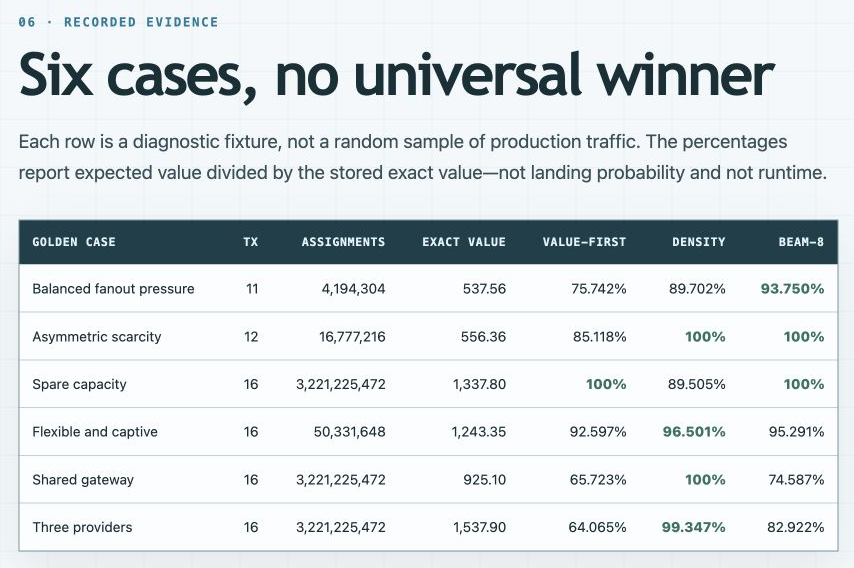
It was also a rabbit hole. I spent time there that could have gone toward broader coverage. For the kind of conversation I wanted to have in the interview, I still think it was a good investment. It gave me something to reason about, not just terminology to repeat.
Getting an answer can be where exploration begins
I don’t think asking AI for answers is inherently a bad way to learn. Sometimes I need an explanation before I have enough context to reason about anything.
The important part is what happens afterward.
I can ask the agent to give me a different example and see whether I can apply the idea. Or change one condition and ask me to predict the result. That is more revealing than asking whether I understood, a question to which I am often willing to give an optimistic answer.
When I have enough context, I can go the other way: try to design a solution, explain my choices, then compare them with how the problem is actually handled. Why did someone choose differently? What constraint did I miss?
Inventing a solution is harder work, and I found that intensity useful. If I’m missing too much context to make progress, I can ask for a hint or work through a smaller problem first. If the questions are too easy, I can ask for something more demanding. Keep telling the agent which is happening: it can see your answers, but it can’t reliably tell how much effort they took.
Neither of us gets to be right by default
An agreeable tutor can make this feel successful before it is. I want encouragement, but I also want it to tell me when my explanation is missing something important.
So I ask it to be specific. Which part of my answer works? Where does the reasoning break? What question would distinguish understanding from a lucky guess?
Then I have to apply some of that scrutiny in the other direction. If its correction doesn’t make sense, I can ask it to justify it. I can follow a source, check a calculation, or build a small experiment. The economic exploration was useful partly because I could inspect what the code did and explain the numbers, rather than accept a persuasive account of what ought to happen.
A passing test doesn’t settle every question, but it gives the conversation something firmer to work with than two confident explanations.
This preparation still left gaps. During the blockchain interview, the interviewer corrected a misunderstanding I had about the route a transaction takes. We clarified it and continued. I came away unsure how well I’d done; about half an hour later, the recruiter told me they wanted to proceed.
That was a good outcome, not a certificate that I had learned everything. I had become able to discuss a previously unfamiliar subject, ask questions about it, and work with a correction. For that interview, those were useful things to be able to do.
Start with something you need to understand
AI did not invent the feedback loop. It made the feedback loop available on demand.
I don’t have to wait for a scheduled lesson to discover that my explanation is missing a step. I can ask another question while the confusion is still in front of me, then try explaining it again. And if the route isn’t helping, I can change it.
If you’d like to try, pick something you actually need to understand. Here’s a starting request you can adapt:
Help me learn [subject] so I can [specific goal] by [deadline]. I have [available study time]. Start by finding out what I already know, and plan around that goal and time. Explain what I need, then ask me questions that test whether I can use it. Ask one question at a time and let me answer before helping. Have me explain how the pieces fit together. Point out gaps rather than treating a plausible answer as a correct one, and help me check claims we’re unsure about.
For me, the attraction is having someone to work through a subject with whenever I have time to learn. The conversation can follow my questions, but it can also push me to answer questions I wouldn’t have asked myself. That’s what made this useful preparation: I could explore what interested me and find out where my understanding still fell short. If you’re already asking AI for explanations, try asking it to challenge your understanding of those explanations too.
AI Tutoring Meets You Where You Are
// …and doesn’t tell anyone where that may be. 🤫
My agent has a complicated relationship with truth. When it started testing me, I wondered whether I was projecting.
I recently prepared for two interviews involving subjects I didn’t know particularly well. One took me into how transactions travel through a blockchain; the other into infrastructure and security. I had limited time, other work to do, and no ambition to become the world’s leading authority before Friday.
I asked an AI agent to help me learn. Along with summaries of the material, I wanted a conversation where I could ask questions and have the agent question me in return. Its follow-up questions helped me notice gaps in my understanding and work through them until I could explain the subject more clearly.
If you have a subject you need to get up to speed on, you can use the same conversation to learn about it and find out how well you understand it (be warned: I found that part humbling). Here’s what helped me make that tutoring useful, even when I only had a short window to study.
“Understanding” the explanation was the easy part
The most useful thing my tutor made me do was explain the whole story back.
Not identify a term. Not agree that a diagram made sense. Explain what happens, why it happens, and how one part leads to the next, without the agent quietly supplying the missing connections.
While reading, I could follow an explanation and feel reasonably comfortable. Producing one was considerably less comfortable. I had to fit the pieces together in my own mind, remember which depended on which, and find the right words. An explanation can get surprisingly far on “and then there’s this other thing” before someone asks what the other thing actually does.
A gap stopped being a vague feeling and became a question I could work on.
During the final preparation session, seemingly simple questions exposed gaps in my understanding. I found it engaging to work out what I was missing and try again. My first answers weren’t good, but after working through the gaps, I could see a radical improvement.
I could have tried explaining everything to an empty room. The room would have been very supportive.
The agent gave me a partner who would ask me to fill in the missing step. I had to tell it that this was the job: don’t finish the explanation for me; help me notice where I can’t finish it myself.
You can change the lesson while you’re taking it
A written explanation has to pick a route through a subject. In a conversation, I can change that route.
Sometimes I needed to stop because an unfamiliar term had appeared inside an explanation of another unfamiliar term. I could ask for that missing context before continuing.
Giving the agent a deadline made the sessions more demanding. Before that, the sessions could feel as though I had a month to learn the subject. Once I made it clear that I needed to be ready the next day, the pace changed. I found that pace much more engaging. Tell the tutor when you need to be ready and how much time you can actually spend learning, not just what you want to learn.
I also changed what we spent that time on. I wanted to understand the economics behind the technical choices. Where does this create value? Who benefits? What are they trying to optimize?
That wasn’t the original route through the material. But understanding people’s motivations helps me understand the mechanisms they’ve built, so I asked to go there.
We ended up writing code to explore competing choices. In the model, sending one transaction along two routes could improve its chance of arriving, but use capacity that could have served another transaction. What looked best for one transaction wasn’t necessarily best for the group. Running examples and figuring out why the results changed made that trade-off much clearer to me.
It was also a rabbit hole. I spent time there that could have gone toward broader coverage. For the kind of conversation I wanted to have in the interview, I still think it was a good investment. It gave me something to reason about, not just terminology to repeat.
Getting an answer can be where exploration begins
I don’t think asking AI for answers is inherently a bad way to learn. Sometimes I need an explanation before I have enough context to reason about anything.
The important part is what happens afterward.
I can ask the agent to give me a different example and see whether I can apply the idea. Or change one condition and ask me to predict the result. That is more revealing than asking whether I understood, a question to which I am often willing to give an optimistic answer.
When I have enough context, I can go the other way: try to design a solution, explain my choices, then compare them with how the problem is actually handled. Why did someone choose differently? What constraint did I miss?
Inventing a solution is harder work, and I found that intensity useful. If I’m missing too much context to make progress, I can ask for a hint or work through a smaller problem first. If the questions are too easy, I can ask for something more demanding. Keep telling the agent which is happening: it can see your answers, but it can’t reliably tell how much effort they took.
Neither of us gets to be right by default
An agreeable tutor can make this feel successful before it is. I want encouragement, but I also want it to tell me when my explanation is missing something important.
So I ask it to be specific. Which part of my answer works? Where does the reasoning break? What question would distinguish understanding from a lucky guess?
Then I have to apply some of that scrutiny in the other direction. If its correction doesn’t make sense, I can ask it to justify it. I can follow a source, check a calculation, or build a small experiment. The economic exploration was useful partly because I could inspect what the code did and explain the numbers, rather than accept a persuasive account of what ought to happen.
A passing test doesn’t settle every question, but it gives the conversation something firmer to work with than two confident explanations.
This preparation still left gaps. During the blockchain interview, the interviewer corrected a misunderstanding I had about the route a transaction takes. We clarified it and continued. I came away unsure how well I’d done; about half an hour later, the recruiter told me they wanted to proceed.
That was a good outcome, not a certificate that I had learned everything. I had become able to discuss a previously unfamiliar subject, ask questions about it, and work with a correction. For that interview, those were useful things to be able to do.
Start with something you need to understand
AI did not invent the feedback loop. It made the feedback loop available on demand.
I don’t have to wait for a scheduled lesson to discover that my explanation is missing a step. I can ask another question while the confusion is still in front of me, then try explaining it again. And if the route isn’t helping, I can change it.
If you’d like to try, pick something you actually need to understand. Here’s a starting request you can adapt:
Help me learn [subject] so I can [specific goal] by [deadline]. I have [available study time]. Start by finding out what I already know, and plan around that goal and time. Explain what I need, then ask me questions that test whether I can use it. Ask one question at a time and let me answer before helping. Have me explain how the pieces fit together. Point out gaps rather than treating a plausible answer as a correct one, and help me check claims we’re unsure about.
For me, the attraction is having someone to work through a subject with whenever I have time to learn. The conversation can follow my questions, but it can also push me to answer questions I wouldn’t have asked myself. That’s what made this useful preparation: I could explore what interested me and find out where my understanding still fell short. If you’re already asking AI for explanations, try asking it to challenge your understanding of those explanations too.
AI Tutoring Meets You Where You Are
…and doesn’t tell anyone where that may be. 🤫
My agent has a complicated relationship with truth. When it started testing me, I wondered whether I was projecting.
I recently prepared for two interviews involving subjects I didn’t know particularly well. One took me into how transactions travel through a blockchain; the other into infrastructure and security. I had limited time, other work to do, and no ambition to become the world’s leading authority before Friday.
I asked an AI agent to help me learn. Along with summaries of the material, I wanted a conversation where I could ask questions and have the agent question me in return. Its follow-up questions helped me notice gaps in my understanding and work through them until I could explain the subject more clearly.
If you have a subject you need to get up to speed on, you can use the same conversation to learn about it and find out how well you understand it (be warned: I found that part humbling). Here’s what helped me make that tutoring useful, even when I only had a short window to study.
“Understanding” the explanation was the easy part
The most useful thing my tutor made me do was explain the whole story back.
Not identify a term. Not agree that a diagram made sense. Explain what happens, why it happens, and how one part leads to the next, without the agent quietly supplying the missing connections.
While reading, I could follow an explanation and feel reasonably comfortable. Producing one was considerably less comfortable. I had to fit the pieces together in my own mind, remember which depended on which, and find the right words. An explanation can get surprisingly far on “and then there’s this other thing” before someone asks what the other thing actually does.
A gap stopped being a vague feeling and became a question I could work on.
During the final preparation session, seemingly simple questions exposed gaps in my understanding. I found it engaging to work out what I was missing and try again. My first answers weren’t good, but after working through the gaps, I could see a radical improvement.
I could have tried explaining everything to an empty room. The room would have been very supportive.
The agent gave me a partner who would ask me to fill in the missing step. I had to tell it that this was the job: don’t finish the explanation for me; help me notice where I can’t finish it myself.
You can change the lesson while you’re taking it
A written explanation has to pick a route through a subject. In a conversation, I can change that route.
Sometimes I needed to stop because an unfamiliar term had appeared inside an explanation of another unfamiliar term. I could ask for that missing context before continuing.
Giving the agent a deadline made the sessions more demanding. Before that, the sessions could feel as though I had a month to learn the subject. Once I made it clear that I needed to be ready the next day, the pace changed. I found that pace much more engaging. Tell the tutor when you need to be ready and how much time you can actually spend learning, not just what you want to learn.
I also changed what we spent that time on. I wanted to understand the economics behind the technical choices. Where does this create value? Who benefits? What are they trying to optimize?
That wasn’t the original route through the material. But understanding people’s motivations helps me understand the mechanisms they’ve built, so I asked to go there.
We ended up writing code to explore competing choices. In the model, sending one transaction along two routes could improve its chance of arriving, but use capacity that could have served another transaction. What looked best for one transaction wasn’t necessarily best for the group. Running examples and figuring out why the results changed made that trade-off much clearer to me.
It was also a rabbit hole. I spent time there that could have gone toward broader coverage. For the kind of conversation I wanted to have in the interview, I still think it was a good investment. It gave me something to reason about, not just terminology to repeat.
Getting an answer can be where exploration begins
I don’t think asking AI for answers is inherently a bad way to learn. Sometimes I need an explanation before I have enough context to reason about anything.
The important part is what happens afterward.
I can ask the agent to give me a different example and see whether I can apply the idea. Or change one condition and ask me to predict the result. That is more revealing than asking whether I understood, a question to which I am often willing to give an optimistic answer.
When I have enough context, I can go the other way: try to design a solution, explain my choices, then compare them with how the problem is actually handled. Why did someone choose differently? What constraint did I miss?
Inventing a solution is harder work, and I found that intensity useful. If I’m missing too much context to make progress, I can ask for a hint or work through a smaller problem first. If the questions are too easy, I can ask for something more demanding. Keep telling the agent which is happening: it can see your answers, but it can’t reliably tell how much effort they took.
Neither of us gets to be right by default
An agreeable tutor can make this feel successful before it is. I want encouragement, but I also want it to tell me when my explanation is missing something important.
So I ask it to be specific. Which part of my answer works? Where does the reasoning break? What question would distinguish understanding from a lucky guess?
Then I have to apply some of that scrutiny in the other direction. If its correction doesn’t make sense, I can ask it to justify it. I can follow a source, check a calculation, or build a small experiment. The economic exploration was useful partly because I could inspect what the code did and explain the numbers, rather than accept a persuasive account of what ought to happen.
A passing test doesn’t settle every question, but it gives the conversation something firmer to work with than two confident explanations.
This preparation still left gaps. During the blockchain interview, the interviewer corrected a misunderstanding I had about the route a transaction takes. We clarified it and continued. I came away unsure how well I’d done; about half an hour later, the recruiter told me they wanted to proceed.
That was a good outcome, not a certificate that I had learned everything. I had become able to discuss a previously unfamiliar subject, ask questions about it, and work with a correction. For that interview, those were useful things to be able to do.
Start with something you need to understand
AI did not invent the feedback loop. It made the feedback loop available on demand.
I don’t have to wait for a scheduled lesson to discover that my explanation is missing a step. I can ask another question while the confusion is still in front of me, then try explaining it again. And if the route isn’t helping, I can change it.
If you’d like to try, pick something you actually need to understand. Here’s a starting request you can adapt:
Help me learn [subject] so I can [specific goal] by [deadline]. I have [available study time]. Start by finding out what I already know, and plan around that goal and time. Explain what I need, then ask me questions that test whether I can use it. Ask one question at a time and let me answer before helping. Have me explain how the pieces fit together. Point out gaps rather than treating a plausible answer as a correct one, and help me check claims we’re unsure about.
For me, the attraction is having someone to work through a subject with whenever I have time to learn. The conversation can follow my questions, but it can also push me to answer questions I wouldn’t have asked myself. That’s what made this useful preparation: I could explore what interested me and find out where my understanding still fell short. If you’re already asking AI for explanations, try asking it to challenge your understanding of those explanations too.
My agent has a complicated relationship with truth. When it started testing me, I wondered whether I was projecting.
I recently prepared for two interviews involving subjects I didn’t know particularly well. One took me into how transactions travel through a blockchain; the other into infrastructure and security. I had limited time, other work to do, and no ambition to become the world’s leading authority before Friday.
I asked an AI agent to help me learn. Along with summaries of the material, I wanted a conversation where I could ask questions and have the agent question me in return. Its follow-up questions helped me notice gaps in my understanding and work through them until I could explain the subject more clearly.
If you have a subject you need to get up to speed on, you can use the same conversation to learn about it and find out how well you understand it (be warned: I found that part humbling). Here’s what helped me make that tutoring useful, even when I only had a short window to study.
“Understanding” the explanation was the easy part
The most useful thing my tutor made me do was explain the whole story back.
Not identify a term. Not agree that a diagram made sense. Explain what happens, why it happens, and how one part leads to the next, without the agent quietly supplying the missing connections.
While reading, I could follow an explanation and feel reasonably comfortable. Producing one was considerably less comfortable. I had to fit the pieces together in my own mind, remember which depended on which, and find the right words. An explanation can get surprisingly far on “and then there’s this other thing” before someone asks what the other thing actually does.
A gap stopped being a vague feeling and became a question I could work on.
During the final preparation session, seemingly simple questions exposed gaps in my understanding. I found it engaging to work out what I was missing and try again. My first answers weren’t good, but after working through the gaps, I could see a radical improvement.
I could have tried explaining everything to an empty room. The room would have been very supportive.
The agent gave me a partner who would ask me to fill in the missing step. I had to tell it that this was the job: don’t finish the explanation for me; help me notice where I can’t finish it myself.
You can change the lesson while you’re taking it
A written explanation has to pick a route through a subject. In a conversation, I can change that route.
Sometimes I needed to stop because an unfamiliar term had appeared inside an explanation of another unfamiliar term. I could ask for that missing context before continuing.
Giving the agent a deadline made the sessions more demanding. Before that, the sessions could feel as though I had a month to learn the subject. Once I made it clear that I needed to be ready the next day, the pace changed. I found that pace much more engaging. Tell the tutor when you need to be ready and how much time you can actually spend learning, not just what you want to learn.
I also changed what we spent that time on. I wanted to understand the economics behind the technical choices. Where does this create value? Who benefits? What are they trying to optimize?
That wasn’t the original route through the material. But understanding people’s motivations helps me understand the mechanisms they’ve built, so I asked to go there.
We ended up writing code to explore competing choices. In the model, sending one transaction along two routes could improve its chance of arriving, but use capacity that could have served another transaction. What looked best for one transaction wasn’t necessarily best for the group. Running examples and figuring out why the results changed made that trade-off much clearer to me.
It was also a rabbit hole. I spent time there that could have gone toward broader coverage. For the kind of conversation I wanted to have in the interview, I still think it was a good investment. It gave me something to reason about, not just terminology to repeat.
Getting an answer can be where exploration begins
I don’t think asking AI for answers is inherently a bad way to learn. Sometimes I need an explanation before I have enough context to reason about anything.
The important part is what happens afterward.
I can ask the agent to give me a different example and see whether I can apply the idea. Or change one condition and ask me to predict the result. That is more revealing than asking whether I understood, a question to which I am often willing to give an optimistic answer.
When I have enough context, I can go the other way: try to design a solution, explain my choices, then compare them with how the problem is actually handled. Why did someone choose differently? What constraint did I miss?
Inventing a solution is harder work, and I found that intensity useful. If I’m missing too much context to make progress, I can ask for a hint or work through a smaller problem first. If the questions are too easy, I can ask for something more demanding. Keep telling the agent which is happening: it can see your answers, but it can’t reliably tell how much effort they took.
Neither of us gets to be right by default
An agreeable tutor can make this feel successful before it is. I want encouragement, but I also want it to tell me when my explanation is missing something important.
So I ask it to be specific. Which part of my answer works? Where does the reasoning break? What question would distinguish understanding from a lucky guess?
Then I have to apply some of that scrutiny in the other direction. If its correction doesn’t make sense, I can ask it to justify it. I can follow a source, check a calculation, or build a small experiment. The economic exploration was useful partly because I could inspect what the code did and explain the numbers, rather than accept a persuasive account of what ought to happen.
A passing test doesn’t settle every question, but it gives the conversation something firmer to work with than two confident explanations.
This preparation still left gaps. During the blockchain interview, the interviewer corrected a misunderstanding I had about the route a transaction takes. We clarified it and continued. I came away unsure how well I’d done; about half an hour later, the recruiter told me they wanted to proceed.
That was a good outcome, not a certificate that I had learned everything. I had become able to discuss a previously unfamiliar subject, ask questions about it, and work with a correction. For that interview, those were useful things to be able to do.
Start with something you need to understand
AI did not invent the feedback loop. It made the feedback loop available on demand.
I don’t have to wait for a scheduled lesson to discover that my explanation is missing a step. I can ask another question while the confusion is still in front of me, then try explaining it again. And if the route isn’t helping, I can change it.
If you’d like to try, pick something you actually need to understand. Here’s a starting request you can adapt:
Help me learn [subject] so I can [specific goal] by [deadline]. I have [available study time]. Start by finding out what I already know, and plan around that goal and time. Explain what I need, then ask me questions that test whether I can use it. Ask one question at a time and let me answer before helping. Have me explain how the pieces fit together. Point out gaps rather than treating a plausible answer as a correct one, and help me check claims we’re unsure about.
For me, the attraction is having someone to work through a subject with whenever I have time to learn. The conversation can follow my questions, but it can also push me to answer questions I wouldn’t have asked myself. That’s what made this useful preparation: I could explore what interested me and find out where my understanding still fell short. If you’re already asking AI for explanations, try asking it to challenge your understanding of those explanations too.
AI Tutoring Meets You Where You Are
…and doesn’t tell anyone where that may be. 🤫
My agent has a complicated relationship with truth. When it started testing me, I wondered whether I was projecting.
I recently prepared for two interviews involving subjects I didn’t know particularly well. One took me into how transactions travel through a blockchain; the other into infrastructure and security. I had limited time, other work to do, and no ambition to become the world’s leading authority before Friday.
I asked an AI agent to help me learn. Along with summaries of the material, I wanted a conversation where I could ask questions and have the agent question me in return. Its follow-up questions helped me notice gaps in my understanding and work through them until I could explain the subject more clearly.
If you have a subject you need to get up to speed on, you can use the same conversation to learn about it and find out how well you understand it (be warned: I found that part humbling). Here’s what helped me make that tutoring useful, even when I only had a short window to study.
“Understanding” the explanation was the easy part
The most useful thing my tutor made me do was explain the whole story back.
Not identify a term. Not agree that a diagram made sense. Explain what happens, why it happens, and how one part leads to the next, without the agent quietly supplying the missing connections.
While reading, I could follow an explanation and feel reasonably comfortable. Producing one was considerably less comfortable. I had to fit the pieces together in my own mind, remember which depended on which, and find the right words. An explanation can get surprisingly far on “and then there’s this other thing” before someone asks what the other thing actually does.
A gap stopped being a vague feeling and became a question I could work on.
During the final preparation session, seemingly simple questions exposed gaps in my understanding. I found it engaging to work out what I was missing and try again. My first answers weren’t good, but after working through the gaps, I could see a radical improvement.
I could have tried explaining everything to an empty room. The room would have been very supportive.
The agent gave me a partner who would ask me to fill in the missing step. I had to tell it that this was the job: don’t finish the explanation for me; help me notice where I can’t finish it myself.
You can change the lesson while you’re taking it
A written explanation has to pick a route through a subject. In a conversation, I can change that route.
Sometimes I needed to stop because an unfamiliar term had appeared inside an explanation of another unfamiliar term. I could ask for that missing context before continuing.
Giving the agent a deadline made the sessions more demanding. Before that, the sessions could feel as though I had a month to learn the subject. Once I made it clear that I needed to be ready the next day, the pace changed. I found that pace much more engaging. Tell the tutor when you need to be ready and how much time you can actually spend learning, not just what you want to learn.
I also changed what we spent that time on. I wanted to understand the economics behind the technical choices. Where does this create value? Who benefits? What are they trying to optimize?
That wasn’t the original route through the material. But understanding people’s motivations helps me understand the mechanisms they’ve built, so I asked to go there.
We ended up writing code to explore competing choices. In the model, sending one transaction along two routes could improve its chance of arriving, but use capacity that could have served another transaction. What looked best for one transaction wasn’t necessarily best for the group. Running examples and figuring out why the results changed made that trade-off much clearer to me.
It was also a rabbit hole. I spent time there that could have gone toward broader coverage. For the kind of conversation I wanted to have in the interview, I still think it was a good investment. It gave me something to reason about, not just terminology to repeat.
Getting an answer can be where exploration begins
I don’t think asking AI for answers is inherently a bad way to learn. Sometimes I need an explanation before I have enough context to reason about anything.
The important part is what happens afterward.
I can ask the agent to give me a different example and see whether I can apply the idea. Or change one condition and ask me to predict the result. That is more revealing than asking whether I understood, a question to which I am often willing to give an optimistic answer.
When I have enough context, I can go the other way: try to design a solution, explain my choices, then compare them with how the problem is actually handled. Why did someone choose differently? What constraint did I miss?
Inventing a solution is harder work, and I found that intensity useful. If I’m missing too much context to make progress, I can ask for a hint or work through a smaller problem first. If the questions are too easy, I can ask for something more demanding. Keep telling the agent which is happening: it can see your answers, but it can’t reliably tell how much effort they took.
Neither of us gets to be right by default
An agreeable tutor can make this feel successful before it is. I want encouragement, but I also want it to tell me when my explanation is missing something important.
So I ask it to be specific. Which part of my answer works? Where does the reasoning break? What question would distinguish understanding from a lucky guess?
Then I have to apply some of that scrutiny in the other direction. If its correction doesn’t make sense, I can ask it to justify it. I can follow a source, check a calculation, or build a small experiment. The economic exploration was useful partly because I could inspect what the code did and explain the numbers, rather than accept a persuasive account of what ought to happen.
A passing test doesn’t settle every question, but it gives the conversation something firmer to work with than two confident explanations.
This preparation still left gaps. During the blockchain interview, the interviewer corrected a misunderstanding I had about the route a transaction takes. We clarified it and continued. I came away unsure how well I’d done; about half an hour later, the recruiter told me they wanted to proceed.
That was a good outcome, not a certificate that I had learned everything. I had become able to discuss a previously unfamiliar subject, ask questions about it, and work with a correction. For that interview, those were useful things to be able to do.
Start with something you need to understand
AI did not invent the feedback loop. It made the feedback loop available on demand.
I don’t have to wait for a scheduled lesson to discover that my explanation is missing a step. I can ask another question while the confusion is still in front of me, then try explaining it again. And if the route isn’t helping, I can change it.
If you’d like to try, pick something you actually need to understand. Here’s a starting request you can adapt:
Help me learn [subject] so I can [specific goal] by [deadline]. I have [available study time]. Start by finding out what I already know, and plan around that goal and time. Explain what I need, then ask me questions that test whether I can use it. Ask one question at a time and let me answer before helping. Have me explain how the pieces fit together. Point out gaps rather than treating a plausible answer as a correct one, and help me check claims we’re unsure about.
For me, the attraction is having someone to work through a subject with whenever I have time to learn. The conversation can follow my questions, but it can also push me to answer questions I wouldn’t have asked myself. That’s what made this useful preparation: I could explore what interested me and find out where my understanding still fell short. If you’re already asking AI for explanations, try asking it to challenge your understanding of those explanations too.